What Is Keuka Lake Known For?
Keuka Lake is known for its Y-shape, cool-climate Riesling and ice wine, Hammondsport, and being the only major Finger Lake without its own AVA.
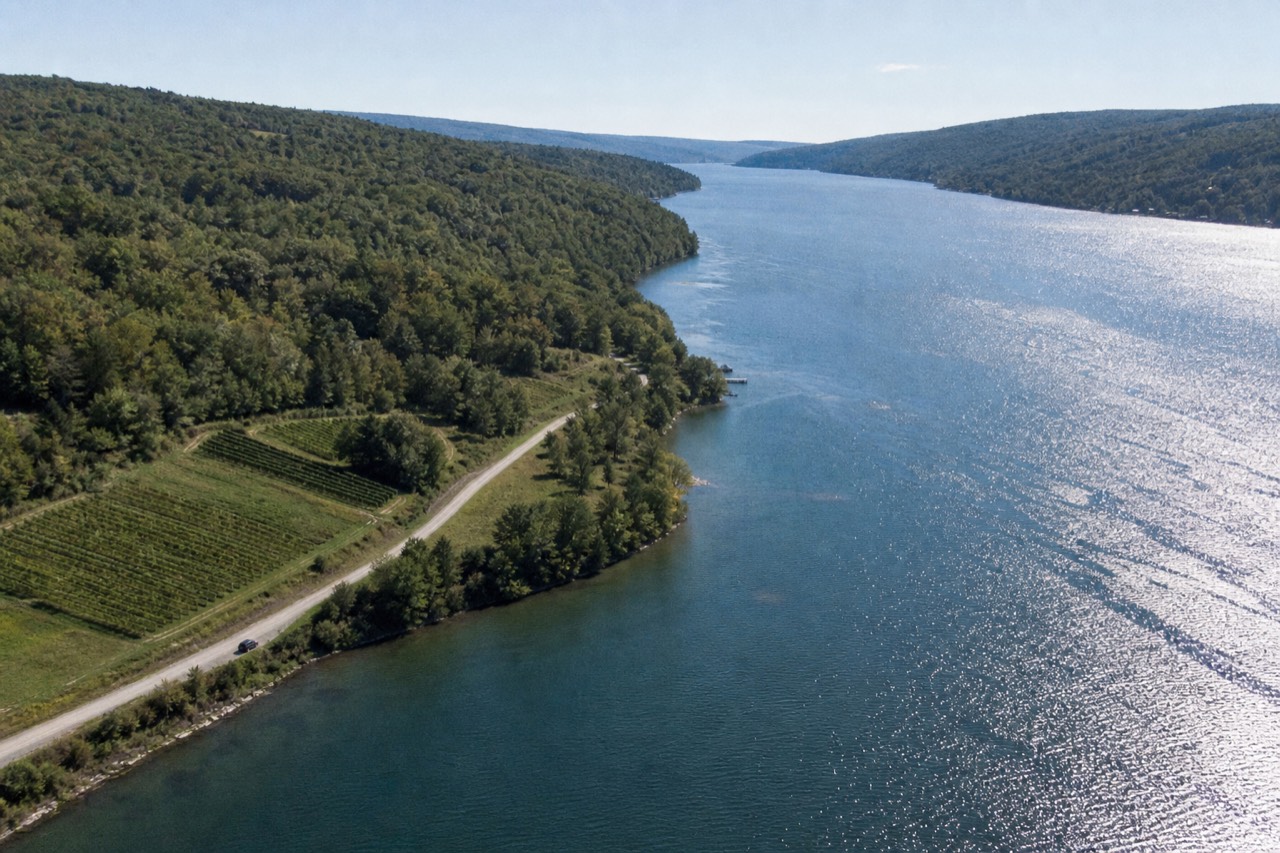
Ask a Finger Lakes regular what sets Keuka apart, and the answer almost always starts with the shape. The Y-shaped lake, the only one of the major Finger Lakes that doesn’t run north-south in a single trough, has a character all its own. It’s where Hammondsport anchors the southern tip, where ice wine gets serious, and where a quieter, less-visited wine trail rewards travelers who skip the Seneca crowds. And unlike Seneca and Cayuga, Keuka has no federally recognized AVA of its own, a genuine differentiator that shapes how its wines are marketed and how the lake feels on the ground. This is the lake that locals call the prettiest, and it’s the subject of a question visitors ask constantly: what is Keuka Lake actually known for?
What Is Keuka Lake Known For?
Keuka Lake is best known for its distinctive Y-shape, a cluster of acclaimed wineries producing cool-climate Riesling and ice wine, the historic village of Hammondsport at its southern tip, and being the only major Finger Lake without its own AVA, a genuine differentiator that shapes how its wine country is marketed and toured. That combination, a one-of-a-kind lake form, a deep wine tradition, and a walkable small-town hub, gives Keuka a personality that’s different from Seneca’s long, steep corridor or Cayuga’s college-town energy.
The lake’s reputation as the scenic favorite isn’t new (see What Is The Most Scenic Winery In The Finger Lakes?). Its three arms, the west branch, the east branch, and the steep north-south stem, mean that no matter where you stand on the shore, the view curves and folds in unexpected ways. That topography also creates a series of microclimates that vineyards have been exploiting for more than a century. Keuka’s wineries are spread around the lake rather than lined up along a single highway, which makes a tour feel more like a loop than a shuttle run. This is also the lake where the region’s ice wine tradition took hold: Vidal Blanc grapes left on the vine into the hard freeze and pressed while still frozen produce a sweet, concentrated dessert wine that Keuka wineries have championed for decades.
For visitors, the practical takeaway is that Keuka Lake offers a full wine-country experience without the crowds that can fill Seneca’s tasting rooms on a fall Saturday. The wineries are smaller on average, the pace is slower, and the town of Hammondsport, right at the lake’s southern tip, puts a handful of tasting rooms, restaurants, and a genuinely interesting aviation museum within walking distance of one another. That walkability is rare in the Finger Lakes, and it’s one of the things that makes Keuka a favorite for travelers who want a wine weekend that doesn’t feel like a logistics puzzle.
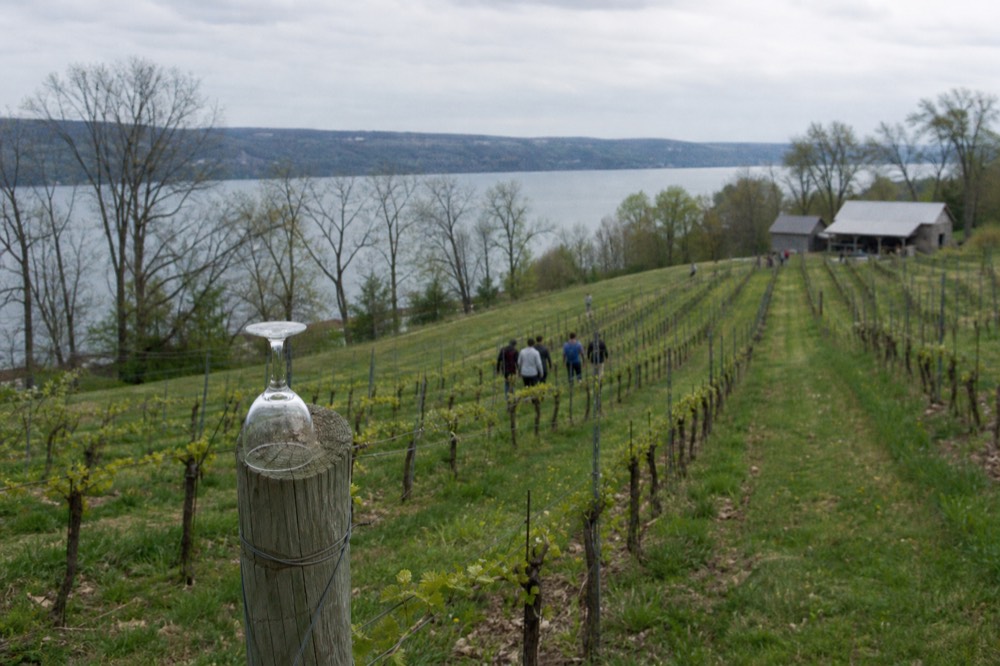
Keuka Lake also stands apart for what it doesn’t have: its own AVA. The Finger Lakes AVA, established in 1982 by the BATF and administered today by the TTB, covers the entire region. Two sub-AVAs sit inside it, Cayuga Lake (1988) and Seneca Lake (2003, encompassing about 204,600 acres). Keuka Lake has neither a sub-AVA nor any pending petition for one. That means every bottle from a Keuka winery carries the broader “Finger Lakes” AVA designation on the label, which winemakers here often frame as a point of pride rather than a shortcoming. The lake’s identity is built on the wine itself, not on a regulatory boundary line.
The winery count around Keuka is smaller than Seneca’s, but the concentration of quality is high. Riesling is the signature pour, as it is across the region, but Keuka’s cooler, later-ripening sites produce versions that lean crisp and mineral-driven. Cabernet Franc and Lemberger (also labeled Blaufränkisch) lead the reds, and ice wine, made predominantly from Vidal Blanc, is a Keuka specialty that draws dessert-wine fans from well beyond the region. For a deeper look at the region’s top producers, see our guide to the best wineries in the Finger Lakes.
For travelers who want a guided experience, Finger Lakes Wine Tours offers two distinct options on Keuka Lake. The small-group Keuka Lake Winery Tour runs from $269 per person with tastings included, a 5- to 6-hour itinerary, and a 4.9 rating across 63 reviews, among the highest star ratings on the site. For those who prefer to choose their own stops, a private customizable tour starts at $389 per group, up to 4, with a 5.0 rating across 6 reviews; tastings are paid separately at each winery, and the guest picks the route. Both options are non-refundable: the shared van caps at 12 travelers, and the private van caps at 4, which keeps either experience intimate.
The private option is especially popular with couples and small groups who have a specific wish list of wineries or want to linger at a particular spot without a fixed schedule. The operator, FLX Chauffeur, builds the day around up to four winery stops of about an hour each, which is enough time to taste, walk the vineyard, and buy a bottle without feeling rushed. Because tastings are extra, the all-in cost depends on how many stops you make and which wineries you choose, but the base rate covers the van, the driver, and the planning.
What Makes Keuka Lake’s Shape So Distinctive?
Keuka Lake’s Y-shape, created by glacial gouging, splits the lake into three distinct arms, west, east, and a steep north-south branch, giving it more shoreline miles per surface acre than any other Finger Lake and creating a series of microclimates that vineyards exploit for late-season ripening. The shape is not just a cartographic curiosity; it’s the reason the lake feels different from every other Finger Lake and why a drive around it reveals a new vista around nearly every bend.
The Y-shape is the result of pre-glacial river valleys that were widened and deepened by the same ice sheets that carved the other Finger Lakes. But where Seneca and Cayuga are long, straight troughs, Keuka’s underlying geology forced the ice to split into two lobes, leaving behind the west and east arms that join at the lake’s midsection before the main stem runs north to Penn Yan. The result is a lake that stretches from Hammondsport at the south tip to Penn Yan at the north, with a shoreline that winds and folds.
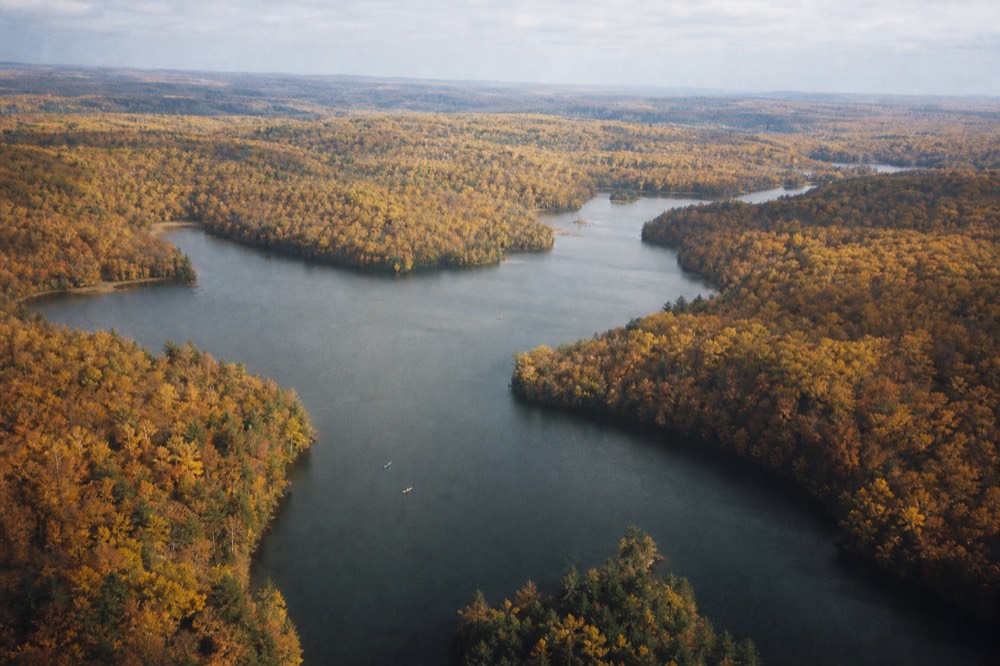
That shoreline complexity matters for wine. The arms create slopes with different sun exposures, wind patterns, and frost-drainage characteristics, which means a vineyard on the west arm can ripen its fruit a week or more later than one on the east arm, even though they’re only a few miles apart as the crow flies. Winemakers talk about the “Keuka effect,” a tendency for the lake’s multiple orientations to produce Rieslings with a wider range of ripeness and acid profiles than you’d find on a single-exposure lake like Seneca. This is one reason Keuka’s wine scene feels less uniform and more exploratory.
The Y-shape also makes Keuka Lake a favorite for recreational boaters and kayakers. The protected arms offer calmer water than the open stretches of Seneca, and the views shift constantly as you round each point. Several wineries have docks or are within a short walk of a public launch, which has given rise to a small but growing boat-to-winery scene. For visitors who want to combine a day on the water with a tasting or two, Keuka’s geography is uniquely suited to it.
The lake’s shape also influences where people stay and how they plan their days. Hammondsport, at the southern tip, is the natural base for exploring the lower two-thirds of the lake, while Penn Yan at the north end puts you closer to the wineries on the west and east arms. The drive between the two towns along the western shore is short, passing several of the lake’s most-photographed vineyard views. No single town dominates the lake the way Geneva anchors the north end of Seneca, which spreads visitors out and keeps the tasting rooms from feeling overrun.
Does Keuka Lake Have Its Own AVA? And What About The Wines?
Keuka Lake does not have its own American Viticultural Area (AVA); unlike Seneca and Cayuga Lakes, which each hold a federally recognized sub-AVA within the larger Finger Lakes AVA, Keuka’s wines are labeled simply under the Finger Lakes AVA, a fact that winemakers here often point to as a point of pride in the lake’s under-the-radar character. The absence of a Keuka-specific AVA is one of the most frequently misunderstood facts about the lake, and it’s worth understanding what that means, and what it doesn’t mean.
An AVA is a federally designated grape-growing region with distinct climate, soil, or geographic features. The Finger Lakes AVA, established in 1982 by the BATF (now administered by the TTB), covers the entire region. Inside it, two sub-AVAs exist: Cayuga Lake, established in 1988, and Seneca Lake, established in 2003 and encompassing about 204,600 acres. Keuka Lake has no sub-AVA, and no petition for one is currently pending. The TTB’s list of established AVAs confirms that Keuka is not among them.
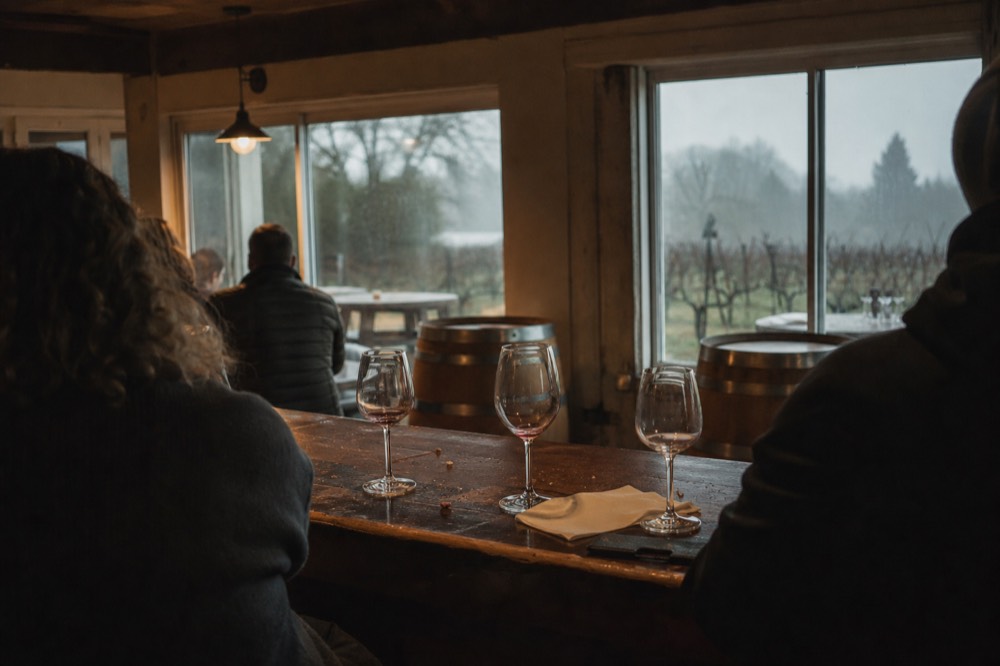
In practice, the lack of an AVA doesn’t diminish the quality of Keuka’s wines; it simply means that every bottle from a Keuka winery carries the broader “Finger Lakes” designation. Some winemakers prefer it that way, arguing that the Finger Lakes name carries more recognition than a smaller, lake-specific AVA would. Others see it as an oversight that Keuka’s distinctive terroir, the Y-shape microclimates, the shale-and-limestone soils, the lake-effect moderation, hasn’t been formally recognized. Either way, it’s a genuine differentiator: Keuka is the only major Finger Lake without its own AVA, and that fact comes up in tasting rooms, on labels, and in conversations about the region’s wine identity.
| Feature | Keuka Lake | Seneca Lake | Cayuga Lake |
|---|---|---|---|
| Sub-AVA | None | Seneca Lake AVA (2003, ~204,600 acres) | Cayuga Lake AVA (1988) |
| Signature white | Riesling (crisp, mineral) | Riesling (broad range) | Riesling, Chardonnay |
| Signature red | Cabernet Franc, Lemberger | Cabernet Franc, Pinot Noir | Cabernet Franc |
| Ice wine tradition | Strong (Vidal Blanc) | Present | Limited |
| Tour style | Loop around Y-shape | East-side/west-side corridors | Lakeside route with Ithaca access |
The wines themselves are the real story. Riesling is the region’s signature grape, and Keuka’s versions tend toward the crisp, mineral-driven end of the spectrum, a reflection of the lake’s cooler, later-ripening sites. The Finger Lakes Wine Alliance notes that the region produces “world-class Rieslings,” and Keuka’s wineries are well represented in that reputation. Cabernet Franc, the most-planted red vinifera in the Finger Lakes, does well on the warmer slopes of the east arm, while Lemberger (Blaufränkisch) has become a cult favorite for its dark fruit and bright acidity. Ice wine, made from Vidal Blanc grapes left on the vine into the hard freeze and pressed while still frozen, is a Keuka specialty that draws dessert-wine fans from across the country.
Tasting fees vary by winery; check the winery’s website for current pricing, and reservations are strongly recommended on weekends from May through October. Several of the smaller producers require them year-round. The pace is slower than on Seneca, and it’s not uncommon to have a tasting room to yourself on a weekday afternoon in June, a quiet luxury that’s harder to find on the busier lakes.
What Towns And Attractions Are On Keuka Lake?
The primary town on Keuka Lake is Hammondsport, a small village at the south end that anchors the lake’s wine tourism, with a walkable downtown, the Glenn H. Curtiss Museum, and a handful of tasting rooms and restaurants within a few blocks; Penn Yan at the north tip and Branchport on the west arm are smaller but also serve as entry points. Hammondsport is the town most visitors mean when they say they’re staying “on Keuka Lake,” and it’s one of the few places in the Finger Lakes where you can park the car and spend a full day on foot.
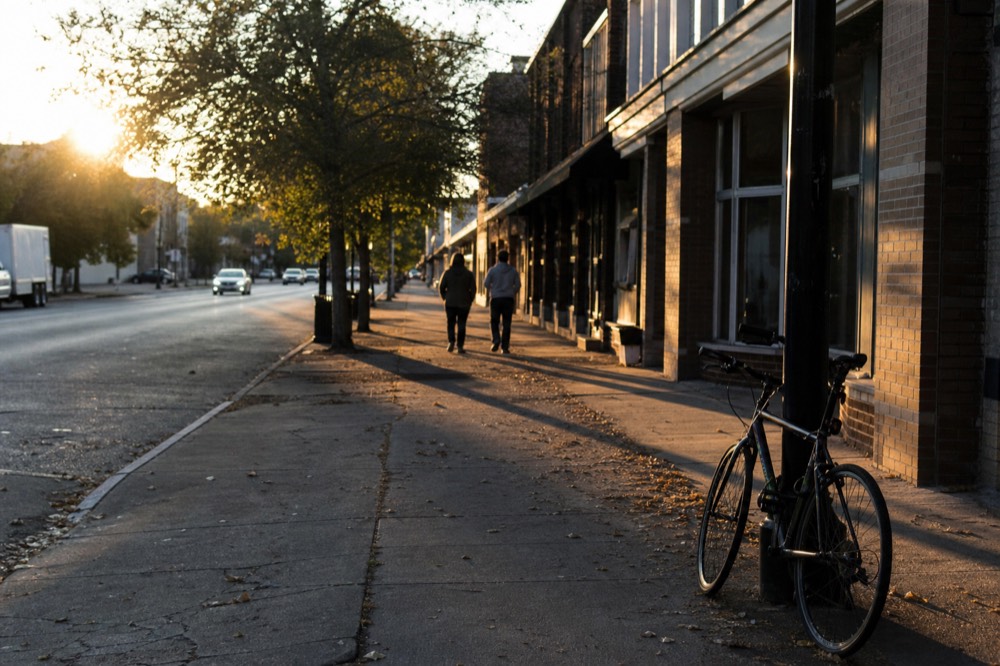
Hammondsport’s main street runs a few blocks from the lakefront up a gentle hill, lined with brick storefronts, a handful of tasting rooms, and a couple of solid restaurants. The Glenn H. Curtiss Museum, dedicated to the aviation and motorcycle pioneer who was born in Hammondsport, is a genuinely interesting stop; Curtiss was a contemporary of the Wright brothers, and the museum holds a collection of early aircraft, motorcycles, and local history exhibits that draw visitors who might not otherwise spend an afternoon in a small-town museum. The village also hosts a seasonal farmers market and several wine-trail events throughout the year.
Penn Yan, at the lake’s northern tip, is the larger of the two towns by population and serves as a gateway for visitors coming from the north. It has a wider range of lodging and dining options, plus a historic downtown with a handful of shops and cafes. The name “Penn Yan” is a portmanteau of “Pennsylvania” and “Yankee,” reflecting the origins of its early settlers, and the town leans into that history with a low-key, old-upstate feel. Branchport, on the west arm, is the smallest of the three and primarily a launch point for boaters and kayakers; it has a marina, a general store, and not much else, but its location at the end of the west arm puts it within a short drive of several wineries.
For visitors planning to tour wineries, the choice of base matters. Hammondsport puts you closest to the densest cluster of wineries on the south end of the lake, and its walkability means you can end a day of tasting with a stroll to dinner rather than another drive. Penn Yan gives you quicker access to the wineries on the west and east arms but requires more driving to reach the southern producers. Branchport works well for boaters and for travelers who want to explore the west arm’s quieter wineries, but it’s the least convenient for a full-lake loop. For lodging ideas near the lake, see our guide on where to stay in Finger Lakes wine country.
A private customizable tour like the one from FLX Chauffeur is especially useful for Keuka Lake because the wineries aren’t lined up along a single road. The driver handles the Y-shape navigation while you pick the stops, which can include a mix of well-known names and smaller producers that don’t appear on the standard group-tour itineraries. At $389 per group, up to 4, the base rate covers the van and the planning, with tastings paid separately at each winery, a format that gives you full control over the day’s pace and budget.
The lake’s attractions extend beyond wine. Keuka Lake State Park, on the west shore north of Branchport, offers swimming, picnicking, and boat launches with views across the lake. The Keuka Outlet Trail, a multi-use path that follows the old canal route between Penn Yan and Dresden, is popular with cyclists and walkers and passes several waterfalls and historic locks. For a lake that’s often described as the quiet one, Keuka packs a surprising amount into its shoreline.
Common Questions About Keuka Lake
What Is Keuka Lake Known For?
Keuka Lake is known for its Y-shape, its cool-climate Riesling and ice wine, the historic village of Hammondsport, and being the only major Finger Lake without its own AVA.
Is Keuka Lake Good For Wine Tasting?
Yes. Keuka Lake has a high concentration of quality wineries, a slower pace than Seneca Lake, and a strong tradition of ice wine. Tasting fees vary by winery; check the winery’s website for current pricing, and reservations are recommended on weekends.
Does Keuka Lake Have Its Own AVA?
No. Unlike Seneca and Cayuga Lakes, Keuka Lake does not have a federally recognized sub-AVA. Its wines are labeled under the broader Finger Lakes AVA.
What Town Is On Keuka Lake?
Hammondsport, at the southern tip, is the primary wine-tourism town. Penn Yan is at the north end, and Branchport sits on the west arm.
How Many Wineries Are On Keuka Lake?
No official count exists for Keuka Lake alone, but the Finger Lakes region overall has about 140 wineries, per the New York Wine & Grape Foundation. Keuka’s wineries are spread around the lake rather than clustered along a single road.
Can You Tour Keuka Lake Wineries Without Driving?
Yes. Small-group guided tours and private customizable vans are available, starting at $269 per person for a shared tour and $389 per group, up to 4, for a private option.