Finger Lakes Riesling: What The Region Is Actually Known For
Riesling is the pour that built the Finger Lakes' reputation, and the deep glacial lakes explain why it works here at all.
Short answer
Riesling is the Finger Lakes signature grape, and the region is widely described as the premier cool-climate Riesling area in the eastern US. Deep glacial lakes moderate the shoreline climate, letting high-acid whites ripen slowly. Cabernet Franc, Chardonnay, Gewurztraminer, Pinot Noir and Lemberger also grow here, plus hybrids like Vidal Blanc used for real ice wine.
Riesling is the reason most wine writers first took the Finger Lakes seriously. The region, established as a federal AVA in 1982, is now widely described as the premier cool-climate Riesling area in the eastern United States, and the Finger Lakes Wine Alliance itself calls the variety the one the region is "perhaps best known for," producing "world-class Rieslings." That is not marketing shorthand. It is a claim backed by geography, a specific federal appellation history, and a set of grapes, both European vinifera and local hybrids, that only make sense once you understand what the lakes actually do to the climate.
This guide walks through what the region is genuinely known for: Riesling first, then the other varieties really grown and bottled here, the ice wine tradition, and the glacial mechanism that makes all of it possible. It closes with the practical side, which lake to taste on and how a guided tour fits in.
What Is Finger Lakes Wine Actually Known For?
The Finger Lakes is known first and overwhelmingly for Riesling, a high-acid, aromatic white grape that thrives in the region's cool, lake-moderated climate. The Finger Lakes Wine Alliance describes the area as producing "world-class Rieslings," and independent wine references regularly call it the premier cool-climate Riesling region in the eastern United States, with styles running from bone dry to late-harvest sweet.
The reputation is earned on specificity, not volume. This is not a region that makes a little of everything and hopes something sticks. Riesling is the anchor, and the styles range across the full spectrum: dry table wines, off-dry bottlings, late-harvest versions, and true ice wine. That range matters, because a grape that can shift from a razor-dry bottle to a half-bottle of frozen-harvest dessert wine gives a tasting room a story that a single-style grape cannot.
The region's credibility also rests on institutional history. The Finger Lakes AVA was established in 1982 by the Bureau of Alcohol, Tobacco and Firearms, under Treasury Decision ATF-113, and is administered today by the Tax and Trade Bureau. Two sub-AVAs sit inside it: Cayuga Lake (1988) and Seneca Lake (2003, about 204,600 acres). Those federal boundaries are not decoration. They signal that the federal government recognized, decades ago, that this narrow band of glacial-lake slopes produces wine distinct enough to protect.
If you want the broader winery landscape before diving into grapes, our guide to the best wineries in the Finger Lakes covers the ground lake by lake.
Why Does Riesling Do So Well In The Finger Lakes?
Riesling thrives here because the Finger Lakes are deep glacial lakes that act as thermal regulators. Seneca Lake runs roughly 618 to 634 feet deep, rarely freezes over, and holds a near-constant deep-water temperature around 39°F year-round, which delays autumn frost, extends ripening, and buffers winter cold along the shoreline slopes where the vineyards sit.
The mechanism deserves a plain-language explanation, because it is the single most useful thing to understand about this region. Water stores heat. A lake hundreds of feet deep stores an enormous amount of summer warmth and releases it slowly through the fall. That does two things for a vineyard on the slope above it: it pushes the first killing frost later into autumn, letting grapes hang longer and develop ripeness, and it keeps the winter air along the shoreline less brutal than it is even a few miles inland. A cool-climate, acid-driven grape like Riesling is the perfect beneficiary. It ripens slowly, keeps its acidity, and never gets the flabby overripeness that ruins it in hotter regions.
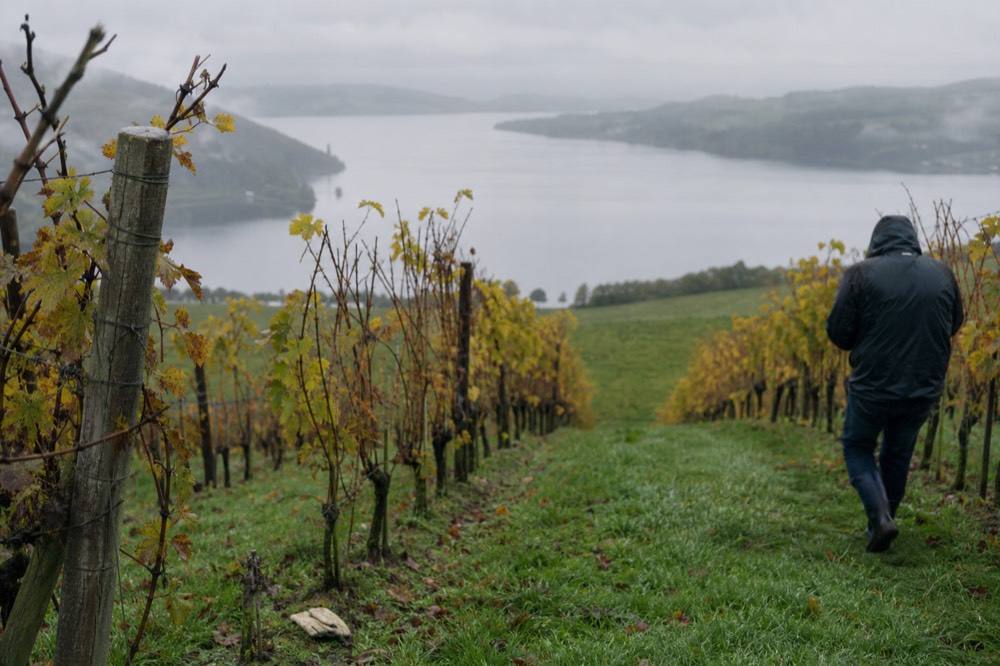
This is also why the vineyards cluster. They are not scattered evenly across the region; they hug the slopes immediately around the lakes, where the moderating effect is strongest. The closer to the water, the better the frost protection and the warmer the winter minimums. The Seneca Lake AVA's federal citation, at 27 CFR § 9.128, describes exactly this: about 204,600 acres of land surrounding the lake, a band of slopes rather than a broad inland region.
The same physics explains what the region cannot do. Hot-climate grapes that need long, sustained heat to ripen are a poor bet here, which is why you will not find the Finger Lakes chasing big, jammy red styles. The regional strengths are precision whites and bright, food-friendly reds, and the varietal list in the next section reflects that honestly.
What Other Grapes Actually Grow In The Finger Lakes?
Beyond Riesling, the confirmed vinifera varieties grown and bottled here are Cabernet Franc (the most-planted red), Chardonnay, Gewürztraminer, Pinot Noir, Lemberger (also labeled Blaufränkisch), and some Pinot Gris. On the hybrid side, Vidal Blanc, Seyval Blanc, Traminette, and Cayuga White are all real and commercially important, with Vidal Blanc serving mainly as the region's ice wine grape.
Cabernet Franc is the red to know. It is the most-planted red vinifera in the region, cold-hardy enough to survive the winters, and it produces the bright, peppery, medium-bodied reds the climate can reliably ripen. Lemberger, which you will sometimes see labeled as Blaufränkisch, is the other red worth seeking out: mid-to-late ripening, dark fruit, spice, and bright acid. Pinot Noir is grown here too, a classic cool-climate gamble that pays off in the better vintages.
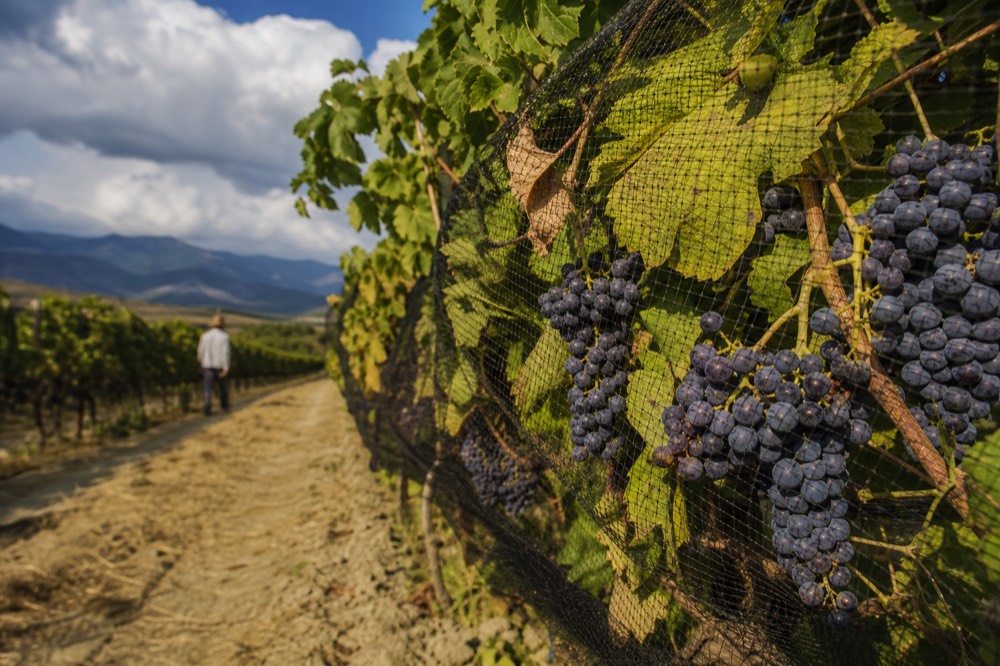
Among the whites, Chardonnay is widely planted and commercially significant, and Gewürztraminer sits just behind it in most plantings, bringing its unmistakable lychee and rose aromatics. Pinot Gris appears commercially as well. The Finger Lakes Wine Alliance maintains a varietals page documenting all of these, and it is worth a read if you want the trade-side view of what is actually in the ground.
The hybrids are not a footnote; they are regional identity. Cayuga White was bred at Cornell University's agricultural experiment station in Geneva, released commercially in the 1970s, and is used for crisp, off-dry, and sparkling styles. Traminette was bred to capture Gewürztraminer-like aromatics with sturdier acidity, and Seyval Blanc fills out blends and varietal bottlings. Vidal Blanc, thick-skinned and high-acid, is the grape most commonly used for the region's ice wine. Wagner Vineyards and Casa Larga both make a Vidal Blanc ice wine, per the wineries' own pages.
| Grape | Type | What it does best here |
|---|---|---|
| Riesling | Vinifera | The signature: dry through late-harvest and ice wine styles |
| Cabernet Franc | Vinifera | Most-planted red; bright, peppery, medium-bodied |
| Chardonnay | Vinifera | Widely planted, commercially significant white |
| Gewürztraminer | Vinifera | Aromatic white behind Chardonnay in most rankings |
| Lemberger / Blaufränkisch | Vinifera | Dark fruit, spice, bright acid |
| Pinot Noir | Vinifera | Cool-climate red, vintage-dependent |
| Vidal Blanc | Hybrid | The main ice wine grape, plus off-dry styles |
| Cayuga White | Hybrid | Cornell-bred; crisp, off-dry and sparkling |
| Traminette | Hybrid | Gewürztraminer-like aromatics, sturdier acid |
| Seyval Blanc | Hybrid | Blends and varietal whites |
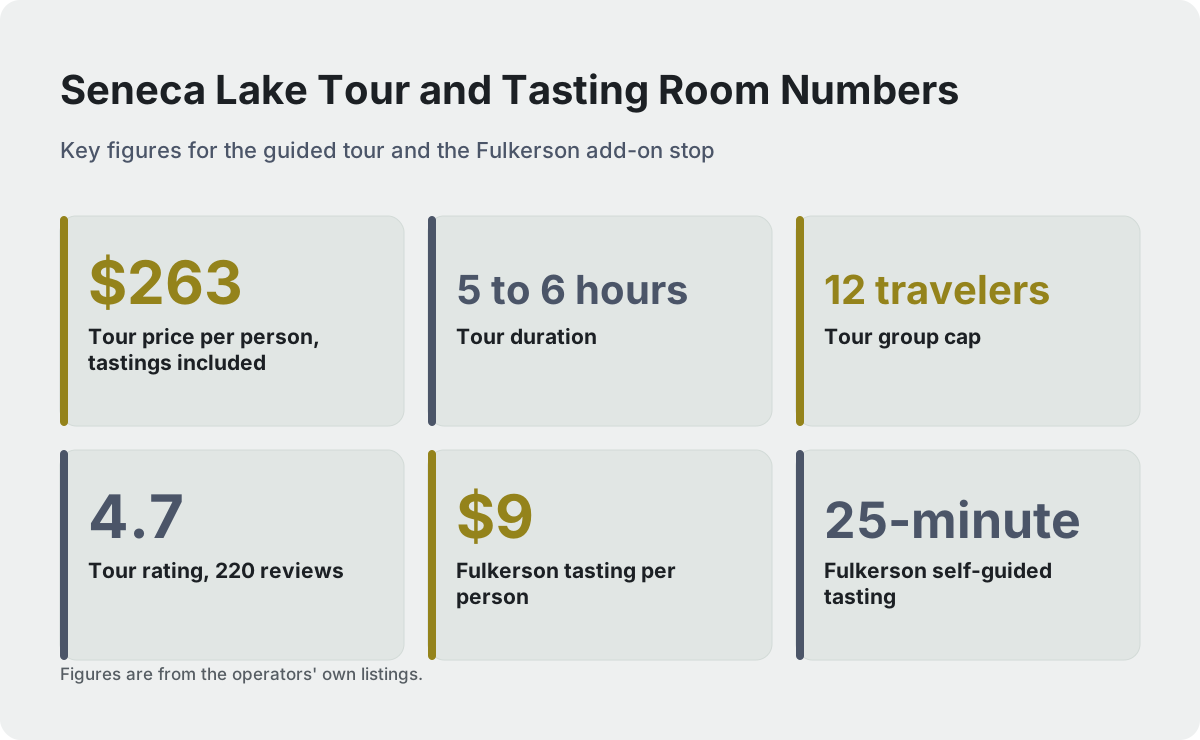
If you would rather taste your way into this list than read about it, the shared small-group tours on Seneca Lake are the efficient route. The Seneca Lake Wine Tasting & Tour from Crush Beer and Wine Tours runs 5 to 6 hours, includes the tastings in the price, from $263 per person, and is capped at 12 travelers. It carries a 4.7 rating across 220 reviews, the most-reviewed listing on this site. Note the listing is non-refundable, so check the cancellation terms on the live listing before you commit.
What Is Finger Lakes Ice Wine, And Is It Real?
Ice wine is real and genuinely produced in the Finger Lakes. It is made from grapes, most often Vidal Blanc, left on the vine into the hard freeze and then harvested and pressed while still frozen, which concentrates sugar and acid into a sweet dessert wine. Wagner Vineyards and Casa Larga both bottle a Vidal Blanc ice wine.
The method is the whole point. A hard freeze, with the grapes still hanging, freezes the water inside each berry. When the frozen grapes are pressed, much of that ice stays behind and only the concentrated juice, dense with sugar and acid, comes out. The result is a dessert wine with intense fruit and enough acidity to stay lively rather than cloying. It is a risky, labor-intensive way to make wine: the grower leaves crop exposed to weather and birds for weeks after normal harvest, and the pressing happens in the cold, often at night.
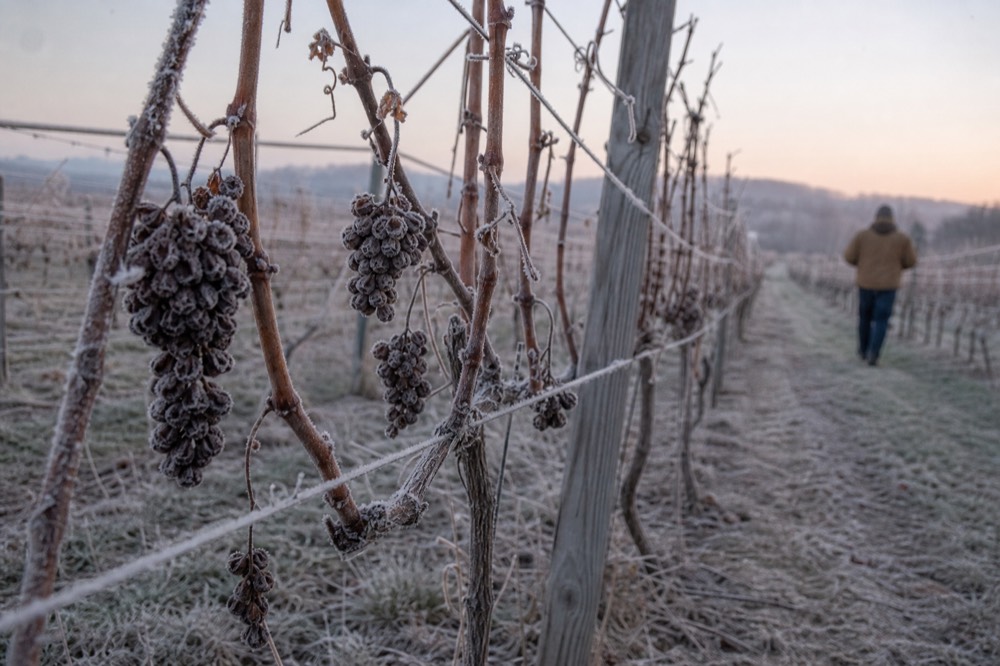
Riesling ice wine also exists here, but Vidal Blanc is the workhorse: thick-skinned, high-acid, and tough enough to hang on the vine into the freeze. If dessert wine is your reason for visiting, ask at the tasting room which winters produced the recent vintages, because a mild winter can mean no ice wine at all from a given winery in a given year.
A note on expectations: ice wine is a small share of production, sold mostly in half-bottles at a premium. It is a tasting-room highlight, not something you will be poured in quantity on a standard tour flight. Treat it as the finale of a visit rather than the main event.
How Should You Taste Riesling Styles, From Dry To Sweet?
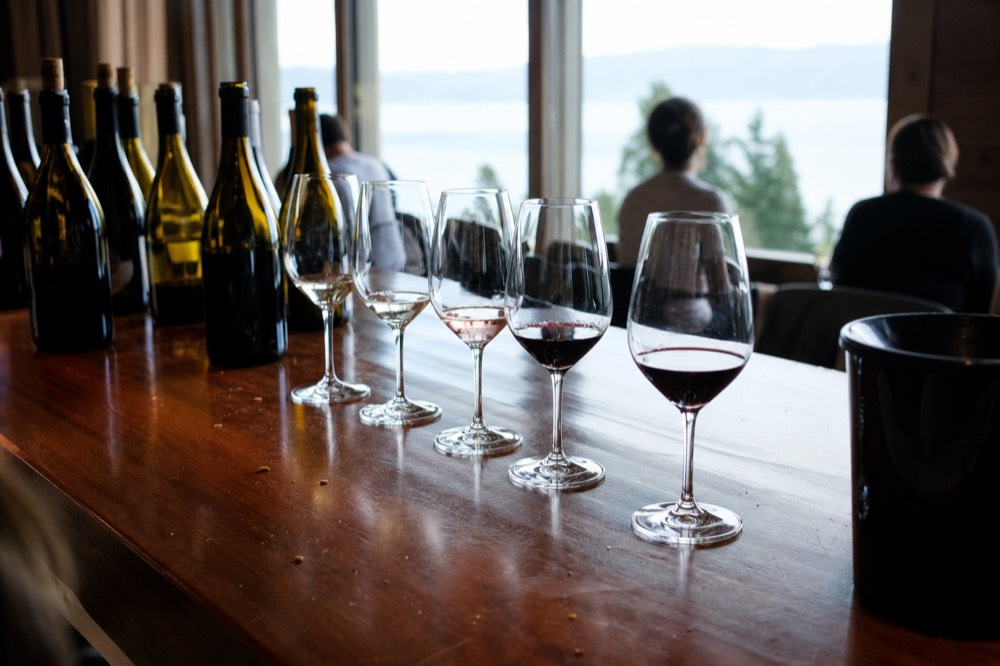
Riesling here runs the full style range: bone-dry table wine, off-dry, late-harvest, and ice wine. The most practical tasting approach is to work from dry to sweet within a single winery's lineup, since the grape stays recognizable across all of them, with acidity as the constant thread and residual sugar as the variable.
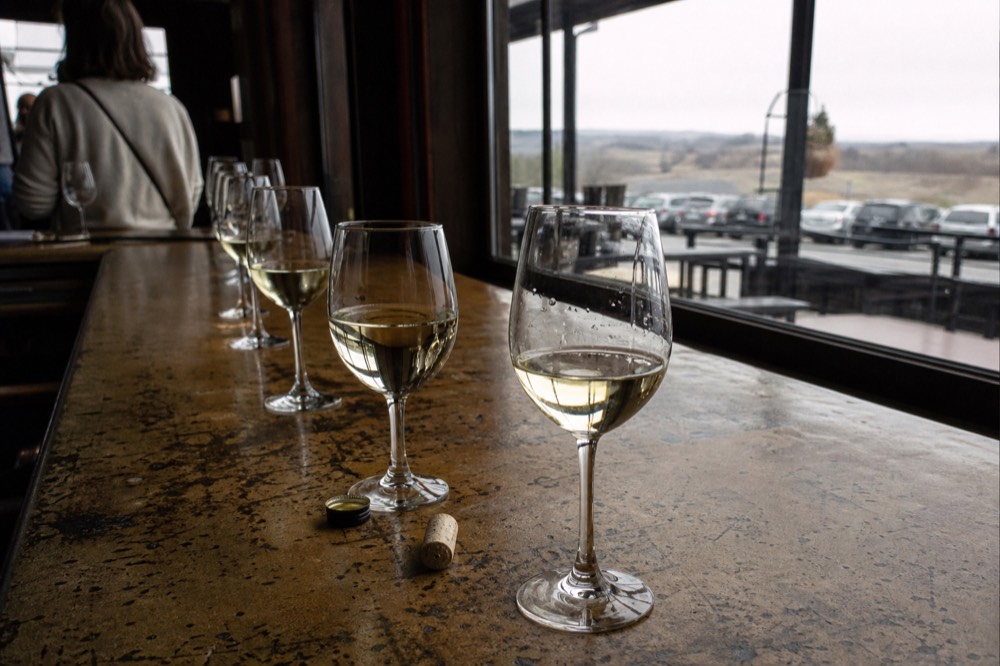
Dry Riesling is where the region's critics focus, and it is the style that made the reputation: lean, mineral, citrus and stone fruit, with acid that keeps the finish clean. Off-dry versions soften that edge with a touch of residual sugar, which is the classic food-pairing lane. Late-harvest bottlings come from grapes left to concentrate on the vine, and ice wine sits at the far end of the sweetness scale, as covered above.
| Style | What to expect | When to drink it |
|---|---|---|
| Dry Riesling | Lean, mineral, citrus and stone fruit, crisp acid | Aperitif, seafood, cellar-worthy |
| Off-dry Riesling | Softer edge, a touch of sweetness, still bright | Spicy food, picnic pours |
| Late harvest | Concentrated fruit, richer texture | After dinner, cheese |
| Ice wine | Intensely sweet, high acid, half-bottle format | Dessert course, special occasions |
One habit worth adopting at any tasting room here: ask whether a pour is dry or off-dry before you taste, not after. The label vocabulary varies from winery to winery, and a "dry" from one producer can taste riper than an "off-dry" from another because of the vintage. The tasting staff answer this question all day and are happy to calibrate you.
Which Lake Should You Taste Riesling On?
Seneca Lake is the default for Riesling-focused visits: it has its own federal sub-AVA (established 2003, about 204,600 acres), the deepest water, and the largest concentration of tasting rooms. Cayuga Lake also holds a sub-AVA (1988), while Keuka has no AVA of its own, a genuine and checkable distinction among the three.
The sub-AVA facts are worth knowing because they are rare, concrete, and often missed by first-time visitors. Of all the lakes, only Seneca and Cayuga have federally recognized appellations inside the Finger Lakes AVA. Keuka Lake, despite its winemaking history, has no AVA of its own. That does not mean Keuka's wines are lesser; it means the federal boundary lines simply do not follow that lake, and a Keuka label reads "Finger Lakes" rather than a lake-specific appellation.
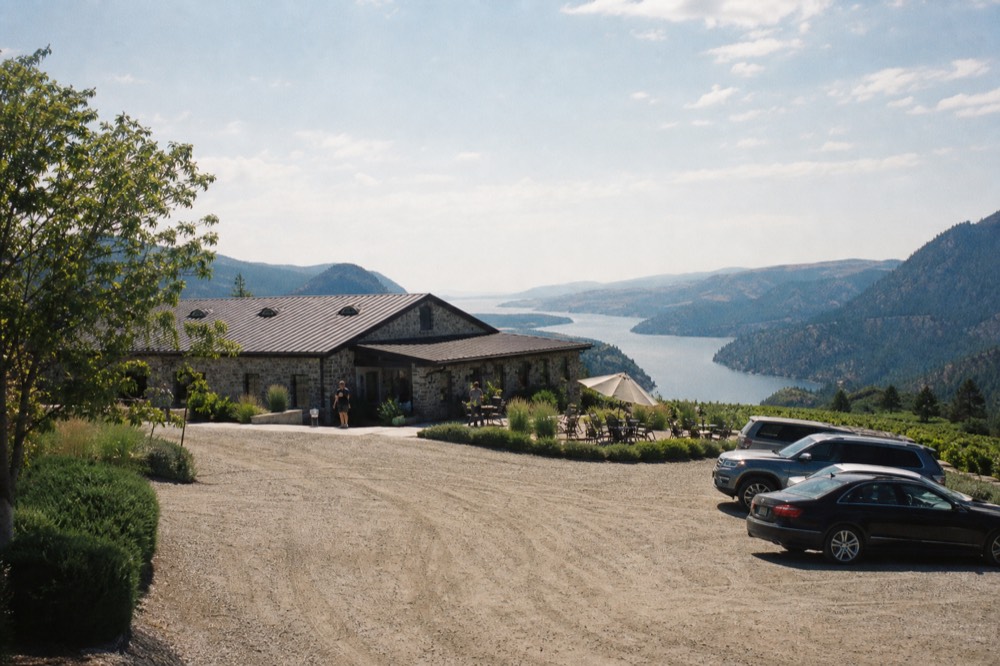
For practical planning, Seneca's advantages are density and depth. The deepest lake moderates its slopes most strongly, and the tasting rooms are packed close enough that a guided van can cover several in an afternoon. Cayuga is a quieter, more spread-out loop. Keuka is the smallest-scale, most historic feel of the three. Our comparison post, Seneca vs. Keuka vs. Cayuga, breaks the choice down for trip planning.
One honest caveat: no public source splits varietal planting by individual lake. The sourcing on Riesling and the other grapes is region-wide. So treat any claim that "this lake specializes in X" from a brochure or a forum with skepticism, and treat the sub-AVA boundaries, which are federal and citable, as the real differentiator.
How Do You Taste Riesling On A Guided Tour?
A guided tour is the efficient way to taste across several Riesling producers in one day, since the lakes are long and the wineries are spread out. Shared small-group van tours on Seneca Lake run roughly 5 to 7 hours with tastings included, while private customizable options let your group pick the wineries and pay tasting fees at the door.
The geography drives the decision. Seneca Lake is a long, narrow lake, and the wineries sit along winding rural roads where a designated driver matters as much as a route plan. A shared tour solves both. The Seneca Lake Wine Tasting & Tour from Crush departs from the 41 Lakefront Hotel in Geneva, runs 5 to 6 hours, includes tastings in the price, and caps the van at 12 travelers. It is the site's default recommendation and the related tour for this guide.
For a budget-friendly companion stop, Fulkerson Winery in Dundee offers a standard walk-in tasting from $9 per person, sourced from the winery's own site, with a 4.4 rating across 19 reviews. It is a 25-minute self-guided tasting, not a tour, and there is no pickup: frame it as an add-on if your route passes Dundee, not a substitute for a guided day.
At the premium end, the Private Full-Day Cultural Wine Tour in Historic Ithaca runs 7 hours from $2,323 per group, the most expensive listing on this site, with lunch and tastings included and free cancellation. It is a new listing without reviews yet, so judge it on its inclusions rather than a star rating. If you are weighing options across price tiers, our guide to Finger Lakes wine tour packages and what they cost lays out the full price ladder.
What Should You Check Before Booking A Riesling-Focused Trip?
Check three things before booking: the drinking age rules (you must be 21 to taste in New York, with no parental-consent purchase exception), the tasting-fee structure of your chosen tour (included versus paid at the door), and the cancellation terms, since several of the region's most popular listings are non-refundable.
The age rule is stricter than many visitors expect. New York's Alcoholic Beverage Control Law sets the drinking age at 21, and a winery tasting room cannot serve an under-21 guest even with a parent present; the parental-consent exception covers possession at home, not purchase or licensed service. Accepted ID includes a New York driver's license, any other US state or Canadian license, a NY non-driver ID, US military ID, or a passport or visa. Operators enforce this at the winery, not at the booking stage, so anyone under 21 in your group can ride along but cannot taste.
| Check before booking | Why it matters |
|---|---|
| Drinking age (21 in NY) | Under-21 guests can travel but cannot taste at wineries |
| Tastings included or extra | Shared Crush tours include them; private FLX Chauffeur tours do not |
| Cancellation terms | Many popular Seneca listings are non-refundable |
| Tour length | Ranges run 5 to 7 hours; plan the day around it |
| Departure point | Most shared Seneca tours leave from Geneva |
Timing matters too. The lake moderation that protects the vines also shapes the visitor season, and our guide to the best time to visit Finger Lakes wineries covers which months reward a Riesling-focused trip. Harvest season concentrates the energy, but the quieter months buy you more time at the bar.
The Short Version
The short version is this: Riesling is the answer to "what is the Finger Lakes known for," and the glacial lakes are the answer to "why here." Deep water holds summer warmth into fall and buffers winter cold on exactly the slopes where the vineyards sit, letting a cool-climate, acid-driven grape ripen slowly instead of not at all, and the region's federal appellation history confirms it.
Around that anchor, the region grows real Cabernet Franc, Chardonnay, Gewürztraminer, Pinot Noir, Lemberger, and a hybrid family that includes the Cornell-bred Cayuga White and the ice wine workhorse Vidal Blanc. Taste the range on Seneca Lake, check your cancellation terms, bring ID for everyone over 21, and start dry. Finger Lakes Wine Tours lists the guided tours below for exactly that Seneca Lake tasting route.
The questions below cover the essentials: which wine the region is known for, why Riesling works here, whether the ice wine is real, which reds to expect, which lake to choose, and the drinking-age rules that apply at every tasting room on the trail.
Common Questions About Finger Lakes Riesling
What Wine Are The Finger Lakes Known For?
Riesling, above all. The Finger Lakes Wine Alliance calls it the variety the region is "perhaps best known for," producing "world-class Rieslings," and the area is widely described as the premier cool-climate Riesling region in the eastern US. Cabernet Franc, Chardonnay, Gewürztraminer, Pinot Noir and Lemberger also grow here, plus hybrids like Vidal Blanc, used mainly for ice wine.
Why Does Riesling Grow So Well In The Finger Lakes?
The deep glacial lakes moderate the climate. Seneca Lake runs roughly 618-634 feet deep, rarely freezes, and holds near 39°F deep water year-round. That thermal mass delays the first killing frost, letting grapes ripen while keeping acidity, and buffers winter cold on the shoreline slopes where vineyards cluster.
Does The Finger Lakes Make Ice Wine?
Yes. Grapes, most often Vidal Blanc, are left on the vine into the hard freeze and pressed while still frozen, concentrating sugar and acid into a sweet dessert wine. Wagner Vineyards and Casa Larga both make a Vidal Blanc ice wine. Riesling ice wine also exists here.
Which Red Wines Does The Finger Lakes Make?
Cabernet Franc is the most-planted red vinifera, giving bright, peppery, medium-bodied wines. Lemberger (also labeled Blaufränkisch) is the other notable red, with dark fruit, spice and bright acid. Pinot Noir is grown as well, a cool-climate red that succeeds in the better vintages.
Which Lake Is Best For Riesling Tasting?
Seneca Lake is the default: it has its own sub-AVA (established 2003, about 204,600 acres), the deepest water, and the densest concentration of tasting rooms. Cayuga Lake also holds a sub-AVA (1988). Keuka Lake has no AVA of its own, though its winemaking history is long. No public source splits varietal planting by individual lake.
Do You Have To Be 21 To Taste Wine In The Finger Lakes?
Yes. New York sets the drinking age at 21 under the Alcoholic Beverage Control Law, and a winery tasting room cannot serve an under-21 guest even with a parent present. Accepted ID includes a NY driver's license, any other US state or Canadian license, a NY non-driver ID, US military ID, or a passport or visa.